
The Muck and the Morgue
Peaky Blinders: The Immortal Man and Holy Week
(Spoilers about the film below)
The Allure of a Fallible Hero
Peaky Blinders: The Immortal Man was released in March 2026 and was the culmination to the decade-long BBC TV series, Peaky Blinders, that originally aired in 2013. It’s a gritty, gangster drama, set post-WWI in impoverished Birmingham, England. Tommy Shelby, played by Cillian Murphy, is the head of the Peaky Blinders, a Romany Gypsy gang that grows in ambition, prestige, and power throughout the series.
Tommy’s character is intriguing. As a decorated WWI hero, he has the respect and acceptance of high society, while preferring to surround himself with those considered outcasts, friends of simple means. He’s sort of a hero among thieves. He commands and executes crimes, often violent, but usually in the name of good, for the sake of the poor, his country, or his family.
This series, and Tommy Shelby specifically, has captivated many. Maybe because Tommy is a type of “fallible hero” we’d all like to be. There’s something alluring about a main character who’s well-intended despite their crimes, someone admired despite their mistakes, someone who seems to always have the power to save the people who need saving.
The Hero Returns
The series-concluding film jumps forward and takes place at the beginning of WWII. Tommy has retired from the Peaky Blinders and secluded himself in the countryside, trying to fight off the torments of ghosts of the past in solitude.
In the meantime, his son, Duke, has taken leadership of the gang. But unlike his father, Duke doesn’t seem to care about acceptance in high society or the well-being of the working class. He’s out for himself, which makes him enemies on all sides.
Tommy’s sister Ada visits him and pleads with him to return to the city, to “speak to your son before he gets himself hung by the law or lynched by the people.”
The Hog Yard: Sin in the Muck
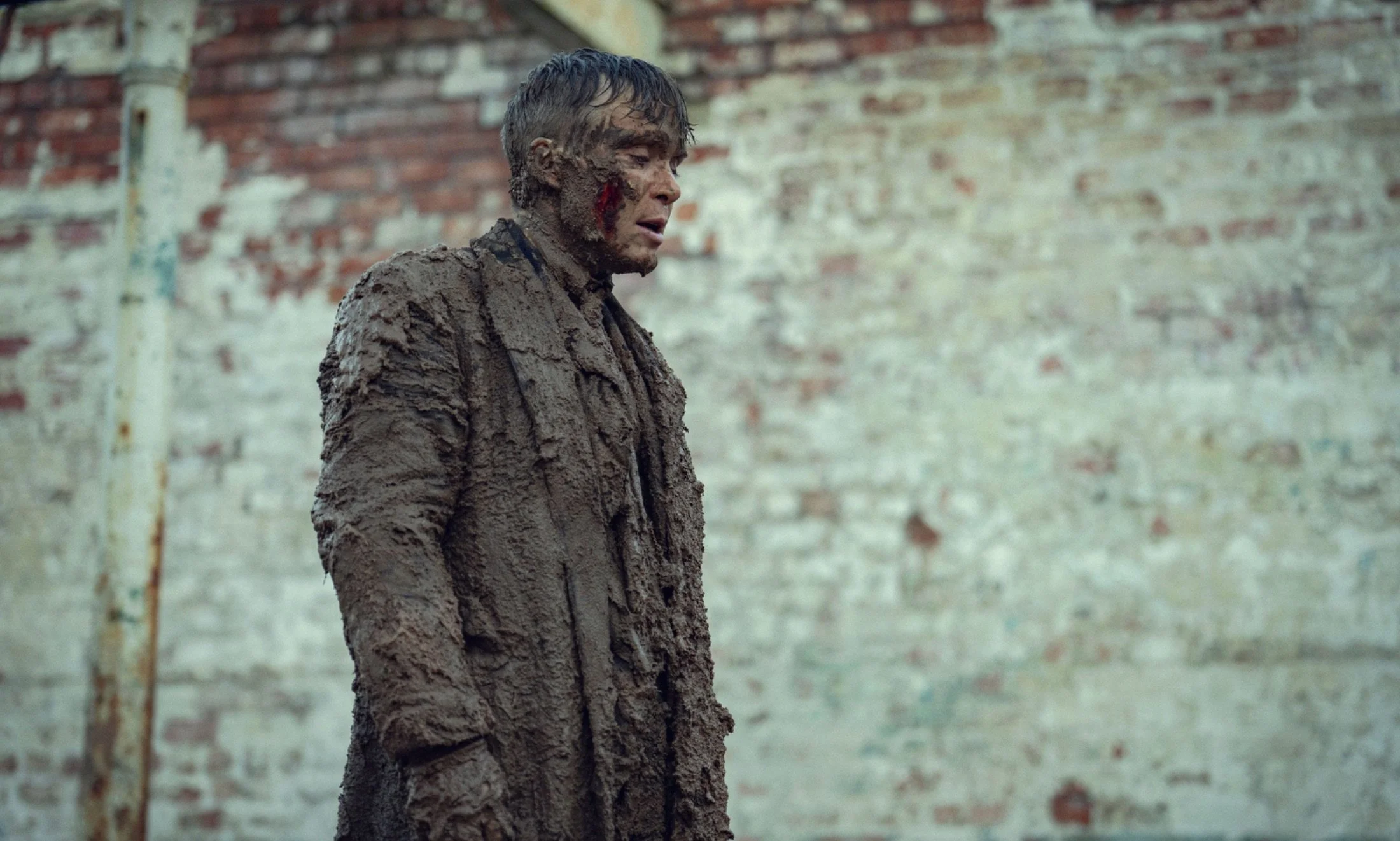
By the time Tommy returns to the city, Ada has been killed, and Duke is complicit in her murder. Tommy finds his son in a hog yard, a cesspool of ankle-deep, thick mud and manure. What follows is a confrontation filled with accusation and desperation:
Tommy: “You crossed every line. You sold women. You stole medicine from children.”
Duke: “I’ve sinned. Because sin is all I know. Because sin is all you left me.”
At one point, Tommy throws Duke into the slop and forces his face toward the muck, almost like he’s trying to drown him in it. Eventually, the anger fades, and they separate, but both men are left covered head to toe in filth. Their faces are barely distinguishable beneath the mud.
It’s a disturbing scene to watch, and one of the actors actually got an infection from filming it. But it’s also a picture of how the Bible talks about sin.
In Psalm 40:2, David cries out to God, describing being stuck in a “slimy pit…muck and mire.” And Isaiah 64:6 tells us that all of us are unclean, that even our best efforts are like filthy rags before a holy God. So in the hog yard, while both men accuse each other of sin, the reality is unavoidable. They’re both covered in it.
The Irony: Accusing While Guilty
There’s a deep irony in this scene. Duke defends himself by claiming he hasn’t committed the worst sin of all, betraying his own family.
But Tommy has.
After leaving the hog yard, Tommy goes to the morgue to see Ada’s body. And there, another truth comes out. Tommy himself killed his brother, Arthur. He confesses, “It wasn’t an accident. It wasn’t an act of mercy. I wanted to be free of him.”
Arthur struggled with what we now recognize as PTSD, needing constant supervision. And in a moment of rage and selfishness, Tommy chose himself over his own brother. So while he stands in judgment over his son, he is just as guilty.
Death: The Great Equalizer
The story doesn’t stop there. In the end, Duke repeats the very sin he once claimed to reject and kills his own father. Tommy Shelby, “The Immortal Man,” is not so immortal after all.
The Roman emperor Marcus Aurelius once wrote, “Alexander the Great and his mule driver both died, and the same thing happened to both.” Death is humanity’s great equalizer. No matter status, power, or legacy, everyone meets the same end.
And from a biblical perspective, it’s not just death that levels us. It’s sin. No one escapes it. No one rises above it. This film is saturated with both. Characters fall one by one, often at each other’s hands. Sin leads to death, over and over again.
Limits of a Human Hero
In true Romany Gypsy fashion, Tommy’s body is burned, reduced to ash in a carriage filled with personal mementos.
Ashes to ashes, dust to dust.
As Cole Arthur Riley writes in Black Liturgies, Ash Wednesday reminds us that we are mortal, that we will all return to dust. And yet, this truth is not just tragic. It’s deeply unifying. Because every one of us shares it.
Tommy once promised, “From this bad will come some good.” But in the end, his story doesn’t deliver on that hope. His life, marked by violence and sin, ends in death, just like everyone else’s. The fallible hero fails us.
Easter and the True Immortal Man
But this is where the gospel meets us.
As we move through Holy Week, through Lent, ashes, death, and mourning, we’re reminded that sin is real, and it stains and infects all of us. We’re all in the hog yard, unable to separate ourselves from the muck.
But Easter’s spin on the story is ripe with scandal and hope. Jesus stepped into our humanity and into the muck. And though he was perfect in every way, he became like us in our fallibility on the cross, taking on our sin, dying in our place, and then being laid in the mortuary next to common mule drivers like us.
And then three days later, he rose. As 2 Timothy 1:10 puts it, Jesus “destroyed death and brought life and immortality to light through the gospel.”
Maybe this is the true allure of a fallible hero story: they not only remind us of ourselves, but even more of the condescension of our Savior, how the Immortal Man became mortal, Unapproachable Light became shrouded in darkness, but then burst forth into new life for us all.
This is our hope. Not in ourselves and our attempts at living the non-Peaky-Blinders life, but in the one who entered into it to pull us up out of it into a perfect mire-free existence forever.